
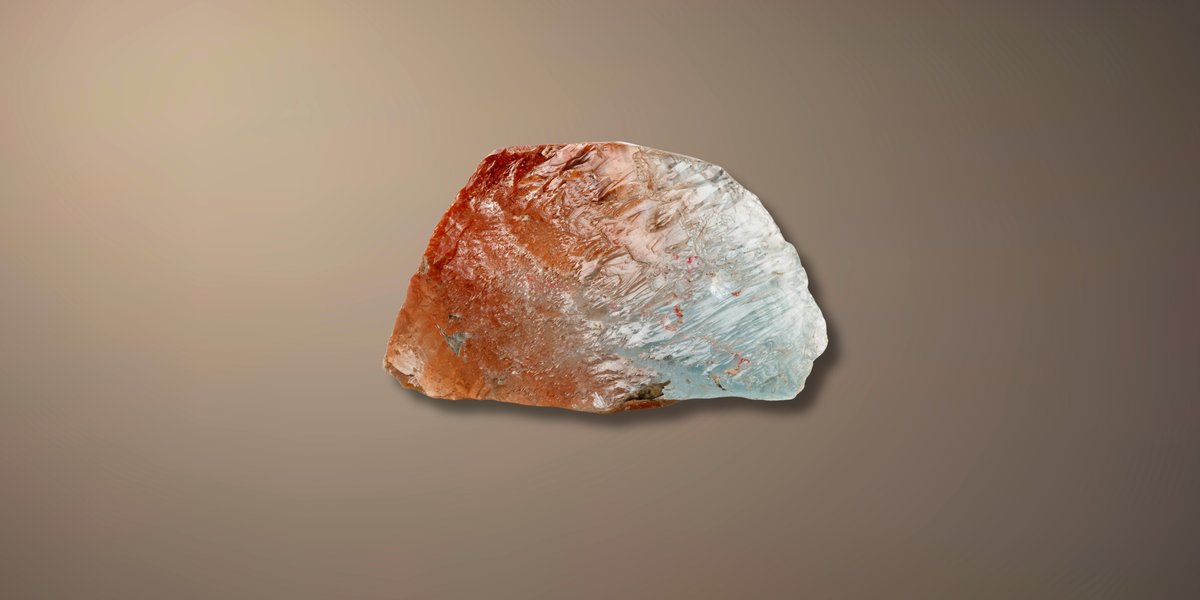
Aluminium is everywhere: in beverage cans, smartphones, cars and aircraft. In 2025, the world produced around 74 million tonnes of primary aluminium – more than any other metal except steel. Our video series follows the value chain step by step, from the raw material to the metal, and shows where our RedRec technology comes in.
Part 1 – Bauxite: where aluminium begins
Bauxite is the main ore for aluminium. It consists mainly of the aluminium minerals gibbsite, boehmite and diaspore, together with iron minerals such as hematite and goethite. Its alumina (Al₂O₃) content typically ranges from 30 to 60%.
The name comes from Les Baux-de-Provence in southern France, where geologist Pierre Berthier described the rock in 1821. Bauxite forms through the weathering of aluminium-rich rocks in tropical and subtropical climates. Large deposits are found in Australia, Guinea, Brazil, Jamaica and China; in Europe, there are deposits in France, Greece and Hungary, among others.
Part 2 – Aluminium oxide: a versatile material
Aluminium oxide, also known as alumina or corundum, is extracted from bauxite using the Bayer process, developed in 1888 by the Austrian chemist Carl Josef Bayer. As a powder it is white; in crystalline form it is colourless, extremely hard and highly resistant to heat and chemicals.
Most alumina is used to make aluminium. It is also used in refractory materials, technical ceramics and electronics. The Bayer process leaves a mineral residue: bauxite residue, often called red mud. For every tonne of alumina, roughly one to two tonnes of residue are produced.
Part 3 – Aluminium production: how the metal is made
Alumina is converted into aluminium by fused-salt electrolysis, known as the Hall–Héroult process. Modern smelters need around 13–15 kWh of electricity per kilogram of aluminium, which is why they are often located close to power plants. Research into inert anodes aims to release oxygen instead of CO₂ at the electrode.
Once produced, aluminium can be recycled almost indefinitely: it melts at around 660 °C and keeps its properties over many cycles.
Where RedRec comes in
Aluminium itself is a circular material. The residue from alumina production, however, has so far mostly been stored. Bauxite, alumina and aluminium are listed as strategic raw materials under the EU Critical Raw Materials Act, which makes every recoverable tonne more relevant.
With RedRec, we separate bauxite residue into an iron-rich fraction and a lighter mineral fraction, each with its own industrial use. Learn how RedRec works.