
Waste Management Worldwide: How Our Waste from Business Sectors Impacts the Planet
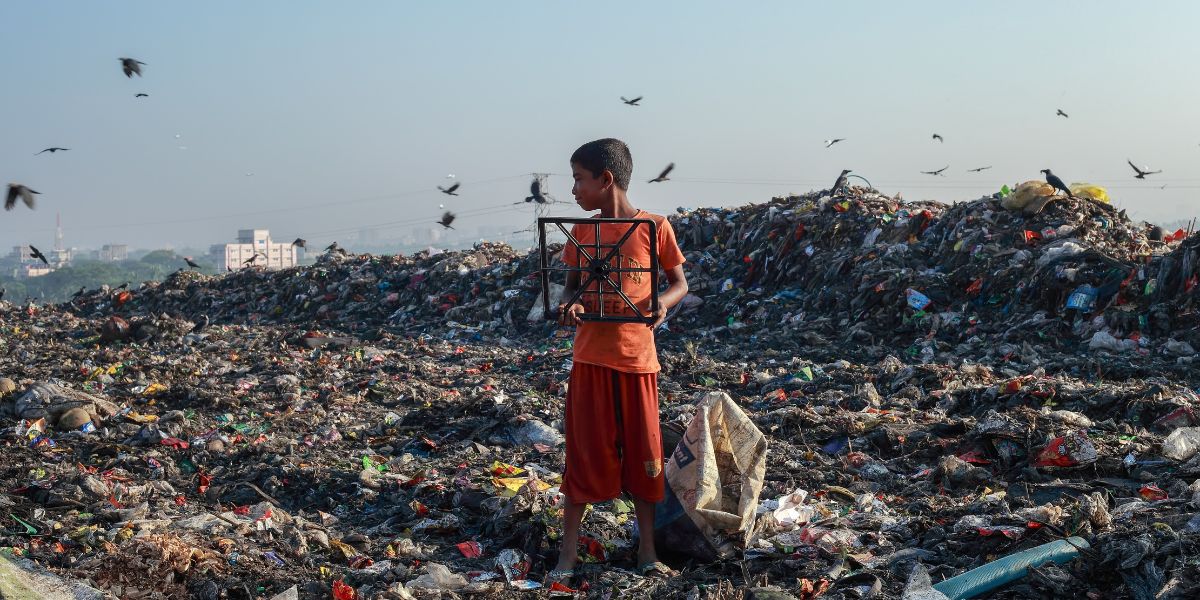
We are all witnessing how waste has taken over our blue planet. It rests on the ocean floor and covers farmers’ fields. It fills office wastebaskets, floats through our solar system and ends up in the bodies of humans and animals. No matter where we look, waste is always within reach.
But not all waste is the same – it comes in many forms and materials. As soon as an item no longer serves its purpose, we want to get rid of it quickly. Out of sight, out of mind – away from our surroundings, our system and our sense of freedom.
But can we really get rid of it?
Globally, over 2.3 billion tons(1) of municipal waste are produced annually, with projections indicating an increase to 3.8 billion tons(1) by 2050. These figures highlight the massive scale of global waste production and the growing challenge of effective waste management, not to mention the costs it entails.
This time, the focus is not on the individual citizen, but on the businesses and institutions that play a key role in our society. We are talking about sectors such as healthcare, research, agriculture, food processing and waste management. Others include disaster relief, cosmetics, animal welfare, airports, military bases, hotels and resorts, and municipalities.
These businesses and institutions are the ones that produce waste on a large scale – through their production, services, and widespread use by the public. But what happens to the waste left behind after use? Who takes care of the waste, especially hazardous waste, which affects us all and burdens our environment?
The Hazardous Waste of This World and How Ermafa Can Help
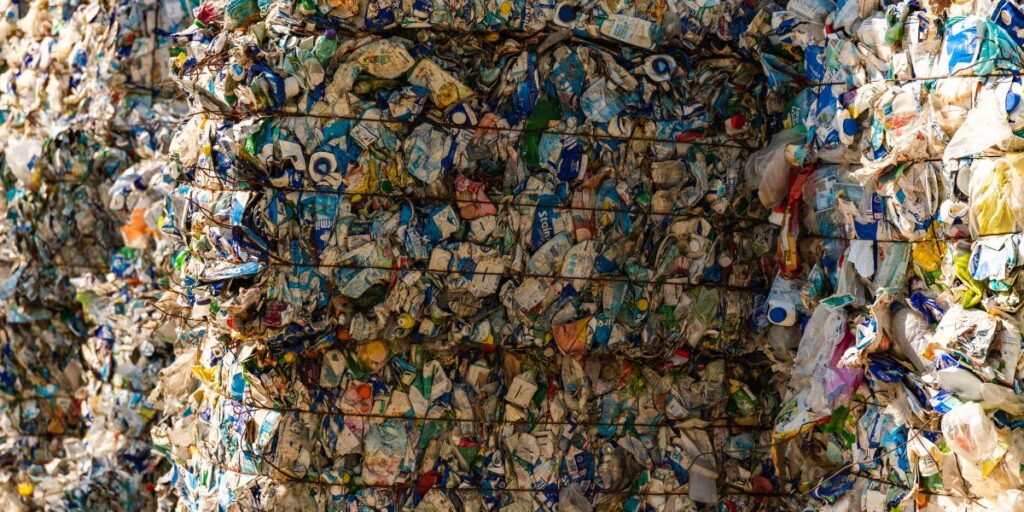
Every year, approximately 400 million tons(2) of hazardous waste are generated worldwide, requiring specialized and often complex disposal procedures. At the same time, about 49% of waste(3) is disposed of in landfills, 22% is poorly managed, leading to environmental issues, and 19% is incinerated. Only 9% of waste is recycled, keeping recycling rates significantly below what is possible and necessary. These figures highlight the urgent need to improve waste management systems to reduce environmental impact and make resource use more efficient.
A more sustainable and eco-friendly alternative lies in the pollutant-free sterilization of hazardous waste. Specialized processes can treat this waste in a way that allows it to be integrated into the regular disposal cycle and reused.
This ensures that waste stays within the circular system and contributes to resource conservation.
There are four common methods for treating hazardous waste: incineration, chemical treatment, microwave sterilization, and shredding followed by hot steam treatment. Each of these methods has its specific advantages and disadvantages. A detailed examination of these approaches can show which method offers the most environmentally friendly and efficient solution for hazardous waste disposal. In this context, Ermafa, with its innovative technology, could play an important role in the safe and sustainable disposal of hazardous waste.
Incineration
As mentioned earlier, approximately 19%(4) of municipal waste worldwide is disposed of through incineration, a method considered a traditional approach to waste disposal. Incineration releases large amounts of CO₂, contributing to climate change. Plastic waste, in particular, which is made from fossil fuels, generates significant greenhouse gas emissions when burned. Incineration also produces toxic pollutants such as dioxins, furans and heavy metals. They can contaminate air, soil and water and pose long-term health risks. The resulting ash residues are often toxic as well and require complex disposal methods. Furthermore, incineration leads to the loss of valuable recycling potential, as recyclable materials such as metals, glass, and plastics are irreversibly destroyed.
Overall, waste incineration is an environmentally harmful method that increases resource waste and exacerbates the burden on both humans and nature.
Nevertheless, there are also some positive aspects of waste incineration. One of the main advantages is energy recovery. Modern incineration plants generate power from waste and, in some regions, reduce dependence on fossil fuels.
The high temperatures also reduce the waste volume dramatically. Less landfill space is needed, and land is already scarce in many areas.
Modern filters and flue gas cleaning systems can significantly reduce emissions. This lowers the impact on the environment and on human health. However, without such technologies, waste incineration remains an environmentally damaging method as harmful pollutants and greenhouse gases are released uncontrollably.
This leads to significant air pollution and has long-term impacts on ecosystems and habitats.
In short, incineration disposes of waste quickly and can even produce energy under ideal conditions. At the same time, it shows that we need to focus more on sustainable alternatives such as recycling and waste prevention.
Chemical treatment
The pre-treatment of hazardous waste with chemicals has both advantages and disadvantages. One of the main benefits is that chemical reactions can neutralize or transform dangerous substances, making subsequent disposal safer. This method is particularly helpful for toxic or corrosive waste, reducing the risk to both humans and the environment. Additionally, it allows for more effective deactivation of pollutants such as heavy metals and organic chemicals.
However, there are also significant drawbacks: the use of chemicals can pose secondary environmental hazards if all residues are not properly disposed of.
Furthermore, the chemicals themselves can be toxic and, if handled or stored incorrectly, pose additional risks to both humans and nature. The costs associated with chemical treatment are also high, and the complexity of the procedures can, in some cases, lead to inefficient or incomplete disposal.
In short, chemical pre-treatment of hazardous waste improves safety and reduces pollutants. However, its ecological and economic drawbacks must be weighed carefully.
Microwave treatment
Among the positive aspects of microwave treatment is its potentially more energy-efficient sterilization compared to traditional methods. Microwaves directly excite the molecules of the waste, generating heat and allowing precise temperature control. This technique can handle smaller quantities more efficiently and does not require additional liquids like water, making it a dry sterilization method. This reduces the risk of dangerous fumes, as long as the microwave chamber is properly sealed.
However, the method requires specific conditions to be effective. Liquids in the waste are essential as they serve as a medium to move the molecules and ensure necessary heat transfer.
For dry waste, efficiency is significantly limited since microwaves cannot effectively transfer heat.
In addition to this main drawback, there are other challenges. Microwave systems are energy-intensive, and chemical additives are often needed to support the process, resulting in additional environmental impacts. They are also ineffective when treating metals, such as needles or infusion sets, as metals reflect microwaves, leading to uneven temperatures and inefficient sterilization.
Another issue is the deformation of plastics in the waste, which can melt in the machine. This affects how the equipment works and can also cause contamination. Melted plastic can create cavities and adhesions that prevent germs from being eliminated.
Additionally, microwave treatment often requires multi-step processes, increasing space requirements and application time. Improperly sealed containers can lead to the release of dangerous fumes, further compromising safety and efficiency.
In summary, microwave treatment is an innovative method for sterilizing hazardous waste. Its effectiveness heavily depends on the waste conditions, particularly moisture content. Moreover, technical limitations, high energy consumption, and potential material changes present significant challenges that must be addressed before widespread application can be achieved.
Shredded and treated with hot steam
The combination of autoclaves, shredder systems, and steam sterilization represents an
advanced and innovative method for the safe and efficient treatment of hazardous waste. This technology reduces waste volume by up to 80%, while liquid waste can achieve a reduction of up to 97%(5). The waste is first shredded and then treated in a rotating screw for uniform sterilization. Steam generated directly in the system completes the process. The result is ordinary household waste that can be disposed of safely.
The method achieves a Sterility Assurance Level (SAL) of up to 10⁻⁴⁸(6), far exceeding the WHO-recommended standard (SAL = 10⁻⁶)(7).
This ensures the reliable elimination of even the most resistant microorganisms, such as prions, known from diseases like Creutzfeldt-Jakob. A key advantage is the chemical-free operation, requiring only electricity and water, making the technology environmentally friendly and resource-efficient.
Moreover, the process eliminates the need for additional odor control measures, as the controlled steam treatment neutralizes all waste odors. The system is user-friendly, requires no complex maintenance, and is supported by 24/7 remote service. It is available in various sizes and can be tailored to meet the specific requirements of different facilities. High safety standards are integral to its design.
Another major benefit is the ability to treat hazardous waste on-site, eliminating the need for transportation.
This not only enhances efficiency but also significantly reduces CO₂ emissions. The initial investment is higher than for conventional methods. In the long run, however, the technology pays off because it saves resources and reduces environmental impact.
Overall, this technology represents a groundbreaking solution for sustainable and safe hazardous waste management. While it requires upfront investment, it offers long-term benefits through high efficiency, user-friendliness, environmental sustainability, and economic viability.
The Winner in Waste Treatment
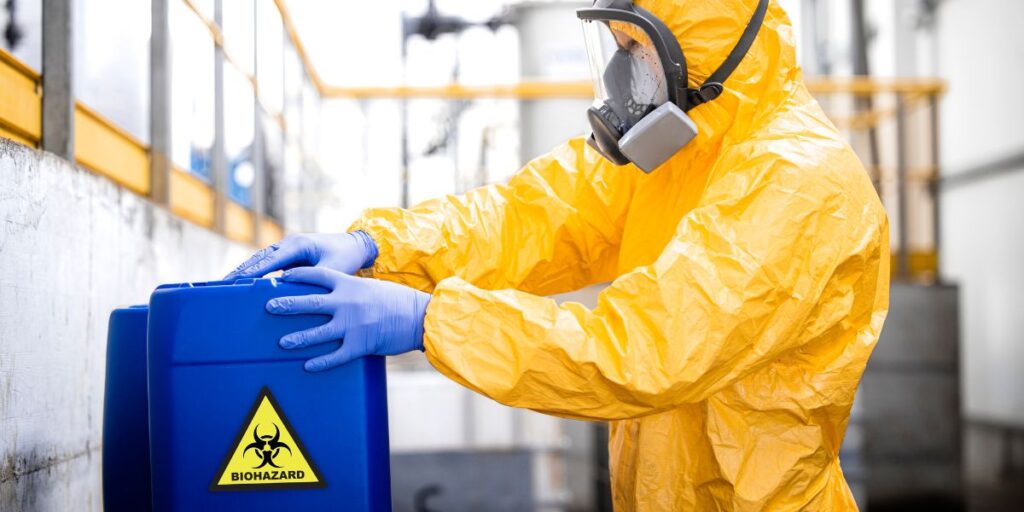
Waste management faces significant global challenges: increasing waste volumes, limited resources, and stricter environmental regulations demand innovative solutions. An analysis of various hazardous waste treatment technologies reveals clear differences in efficiency, environmental impact, and economic viability.
Established methods such as waste incineration, which disposes of approximately 19%(8) of municipal waste worldwide, significantly reduce waste volume and contribute to power generation. However, they also release substantial amounts of CO₂ and toxic pollutants like dioxins, burdening the environment and human health while destroying valuable recycling potential.
Additionally, the ash residues from waste incineration require complex disposal processes, making it an environmentally harmful and resource-intensive option.
Chemical treatments offer an alternative by neutralizing or converting pollutants through targeted reactions, making subsequent disposal safer and reducing risk. However, these processes are costly and technically complex, and the residues from chemical treatments can pose environmental risks. These disadvantages greatly limit the widespread applicability of this approach.
Newer technologies such as microwave treatment also have significant limitations. While it allows precise sterilization without additional fluids, its effectiveness strongly depends on specific waste conditions, such as adequate moisture content.
Dry or metal-containing materials can impair the efficiency of microwave treatment, and melted plastics can lead to operational issues. High energy consumption and complex maintenance further diminish the economic attractiveness of this method.
In contrast, Ermafa’s MACS system, which combines autoclaves, shredding systems, and hot steam sterilization, offers a particularly innovative and sustainable solution. This technology can reduce waste volume by up to 97%(9) and guarantees reliable elimination of even highly resistant microorganisms like prions. The chemical-free process requires only electricity and water, conserving resources and minimizing environmental impact. Another advantage is the ability to treat waste directly on-site, significantly reducing transport needs and associated CO₂ emissions.
Despite higher initial investment costs, this method ultimately excels in efficiency, safety, and environmental sustainability.
Nevertheless, it should be emphasized that no technology is free from challenges. The selection of the optimal system depends on specific requirements such as the type of waste, regulatory standards, and available resources. Research and innovation will shape the future of waste management. Solutions like MACS show how existing methods can be improved and how new, resource-efficient alternatives can be developed.
A Call to Corporate Responsibility
The future of our planet rests in the hands of those who make decisions and wield influence – particularly companies and institutions. Those who truly wish to create a livable world for future generations can no longer hesitate. It is time to take action and consistently implement sustainable solutions.
Our blue planet, our only home in the universe, deserves more than just words.
It requires action.
Ermafa, with its MACS technology, sets a new standard and demonstrates that it is already possible to combine economic success with ecological responsibility.
Now is the time to lay the foundation for a sustainable future – for our generation and for those who come after us. Companies that act today are not only securing their own success but also contributing to creating a world where people and nature can coexist harmoniously. Let us take responsibility together – for a livable future on our only home, Earth.
